

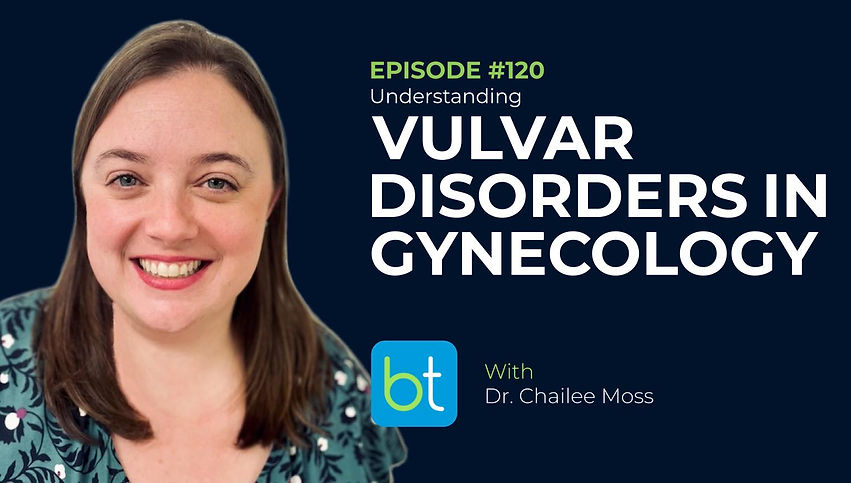

Episode # 120 • 09 Jun 2026
Understanding Vulvar Disorders in Gynecology
Can a “normal” pelvic exam mask life-altering pain? On this episode of BackTable Women’s Health, host Dr. Karen Toubi interviews board-certified OBGYN Dr. Chailee Moss about why common vulvovaginal pain and skin conditions are frequently missed or dismissed as “normal” exams. Dr. Moss explores how gaps between gynecology and dermatology, limited training, and the under-recognition of non-life-threatening but highly morbid pain contribute to these diagnostic challenges, including mental health impact and even suicidality in some cases.
Timestamps
00:00 - Introduction
03:56 - Why Pain Gets Missed
08:58 - Building Trust With Time
10:51 - Vulvodynia Workup Basics
16:02 - Hormonal Vestibulodynia Clues
21:21 - New Treatments On Horizon
23:07 - Lichen Steroid Maintenance
26:25 - Biopsy Decisions And Mimics
30:30 - Multimodal Treatment Planning
33:00 - Pelvic Floor PT Done Right
35:55 - When To Consider Surgery
37:33 - Clinical Trials Ketotifen Botox
40:40 - Conclusion and Resources
Resources
- Experiences of Care and Gaslighting in Patients With Vulvovaginal Disorders https://jamanetwork.com/journals/jamanetworkopen/fullarticle/2833711
- ISSWSH https://www.isswsh.org/
- Pudendal Hope https://www.pudendalhope.info/
- Tight Lipped https://www.tightlipped.org/
- The National Vulvodynia Association https://www.nva.org/
You may also like
More about this episode
They discuss rebuilding trust through time, attentive listening, and clear communication, along with a detailed evaluation process that includes medication review, targeted symptom questions, Q-tip mapping, vulvoscopy, cultures, and selective biopsy. The approach informs an individualized, multimodal treatment plan. Additional topics include lichen steroid counseling,differentiating mimickers like yeast and irritant dermatitis, and connecting patients to resources such as ISSWSH, ISSVD, and support groups.
The Materials available on BackTable are provided for informational and educational purposes only and are not a substitute for the independent professional judgment of a qualified healthcare professional in diagnosing or treating patients. Any opinions, statements, or views expressed are those of the individual contributors and do not necessarily reflect those of the publisher, platform, or any affiliated organization.