

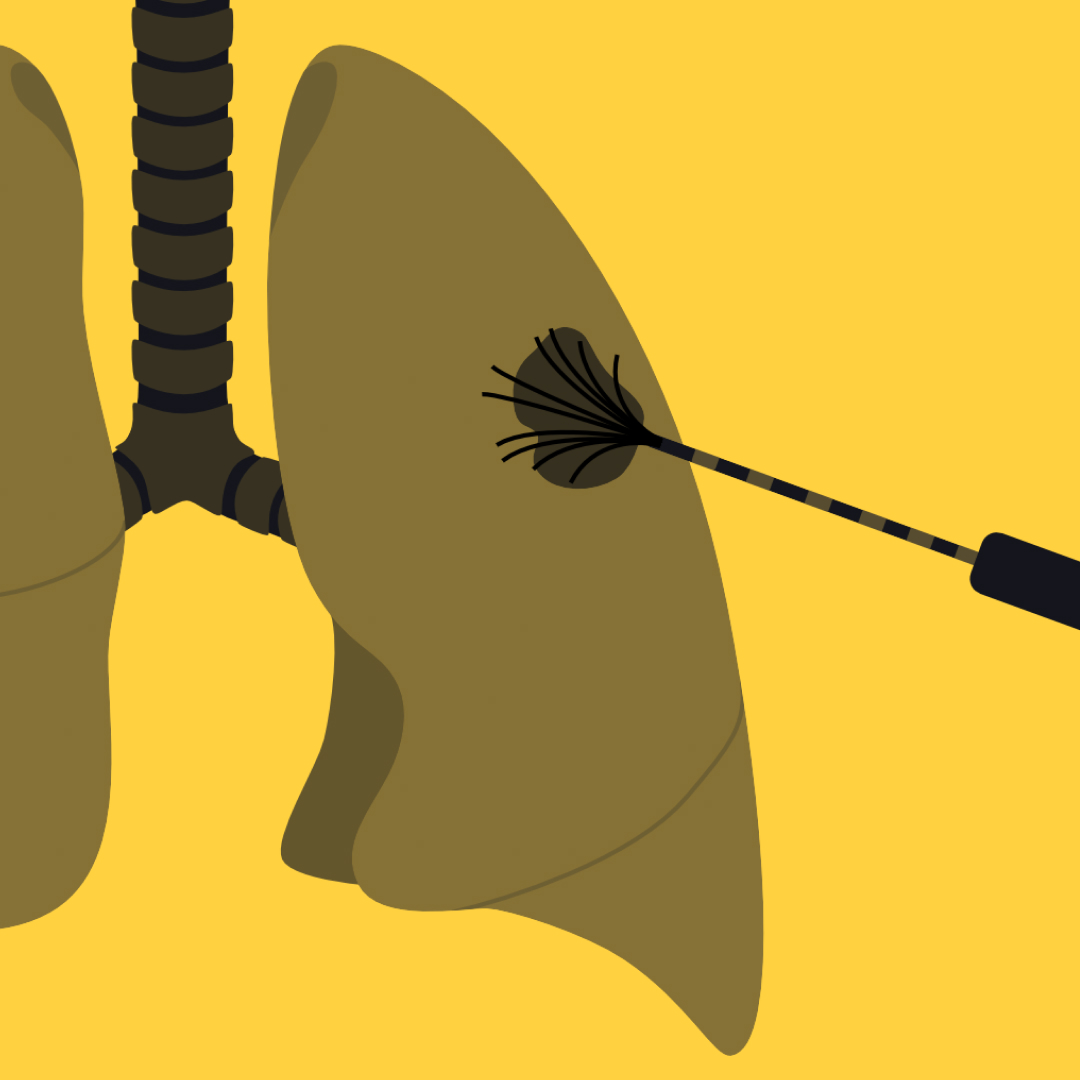
Non-Small Cell Lung Cancer: Surgical Approaches, Ablative Treatments & Radiotherapy
26 lessons · 2h 30m
Published: December 2025
This course explores modern lung cancer treatment using radiotherapy, ablation, and bronchoscopic techniques, covering modality selection, workflow, biopsy strategies, and case-based decision-making for early-stage and complex lesions. The course is supported by an educational grant from Johnson and Johnson and Varian Health Systems.
To earn CME/CE credits for this course, it must be completed on FreeCME.
Lessons
Ablative Treatments & Radiotherapy: The Latest in Lung Cancer Treatment
- 1Benefits, costs, and technologies of photon and proton therapy
- 2History of tumor ablation technologies
- 3Bronchoscopic advancements, challenges, and efficacy in BP fistula treatment
- 4Treatments and decisions in early-stage lung cancer management
- 5Treatment strategies and challenges for non-aggressive lung cancers
- 6Strategies for managing local failure post-SBRT in non-metastatic patients
- 7Margins and radiation effects in lung tumor management
Lung Ablation: Techniques, Challenges & Best Practices
- 8Techniques for confirming lung tumor ablation success
- 9Ablation techniques, modality choice, and sedation preferences
- 10Lung ablation methods, positioning, and sedation challenges
- 11Central lesions treatment using high-dose brachytherapy and logistical workflow
- 12Data on lesion treatment methods and advancements in brachytherapy procedures
Biopsy & Ablation Decision-Making in Lung Cancer
- 13Bronchoscopic versus percutaneous biopsy methods and influencing factors
- 14Interdisciplinary strategies for biopsy and ablation approach and patient management
- 15Imaging schedule post therapy for different lung cancer cases
- 16Case 1: Robotic imaging, biopsy techniques, and treatment options for a lung lesion
- 17Case 2: Radiation treatment for elusive lung nodule with patient-focused collaboration
Advanced Surgical Approaches in Lung Cancer Management
- 18Lymph node staging and surgical approaches for non-small cell lung cancer
- 19Assessing pulmonary function and comorbidities before lung resection
- 20Minimally invasive lung surgery techniques and training challenges
- 21Role of robotics and types of lung resection for NSCLC
- 22Lung surgery considerations, outcomes, and margins for segmentectomy and lobectomy
- 23Upstaging and its impact on surgical treatment decisions
- 24Managing lung cancer and metastatic disease through multidisciplinary approaches
- 25Case 1: Lung adenocarcinoma treatment options, focusing on preservation and ablation methods
- 26Case 2: Multifocal lung cancer with treatment over ten years
Topics
- 2025 NSCLC Creator Weekend™
- Adenocarcinoma
- Brachytherapy
- Cryoablation
- Cytopathology
- Interventional Oncology (IO)
- Interventional Pulmonology
- Interventional Radiology (IR)
- Irreversible Electroporation (IRE)
- Lung Ablation
- Lung Biopsy
- Lung Cancer
- Medical Oncology
- Microwave Ablation
- Multidisciplinary Care
- Palliative Care
- Pneumothorax
- Proton Therapy
- Pulmonology
- Radiation Oncology
- Resection
- Robotic Bronchoscopy
- Stereotactic Body Radiation Therapy (SBRT)
- Thoracic Oncology
- Thoracic Surgery
- Tumor Ablation
- Video-Assisted Thoracoscopic Surgery (VATS)