



Episode # 3 • 17 Jan 2025
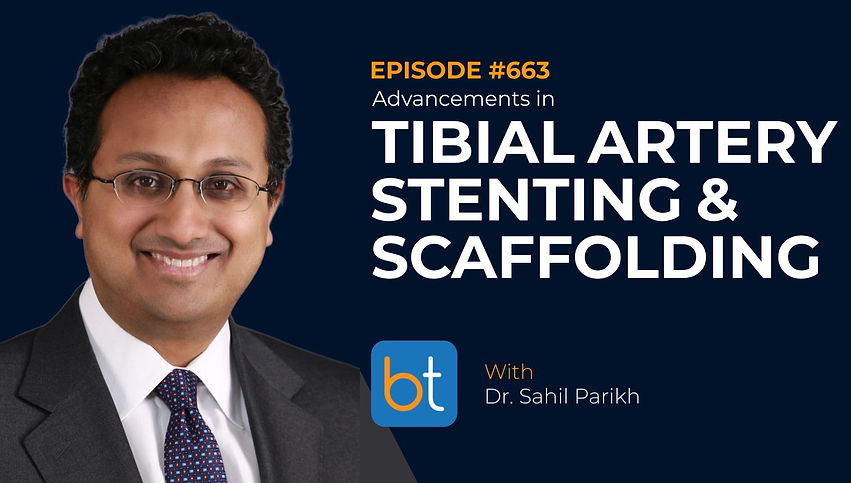
Advancements in Tibial Artery Stenting & Scaffolding
What is the emerging role of bioresorbable scaffolds in treating tibial artery disease, and how do they compare with traditional stenting and drug delivery approaches? In this episode of the BackTable Podcast, Dr. Sabeen Dhand interviews interventional cardiologist Dr. Sahil Parikh at Columbia to explore the evolution of tibial artery stenting, drug-eluting technology, and the latest evidence behind bioresorbable scaffolds. The discussion highlights patient selection, treatment algorithms, technical considerations, and the impact of drug delivery choices on patient outcomes.
This podcast is supported by
Timestamps
00:00 - Introduction
04:00 - Bioengineering Origins
08:29 - Paclitaxel vs. Limus
13:43 - When to Stent Tibials
16:14 - Stepwise Tibial Algorithm
18:46 - Stent Platforms and Costs
23:09 - Bifurcation Stenting Basics
26:35 - Fracture and Crush Risks
30:10 - Device Selection: Born for Tibials
33:27 - Materials and Drug Kinetics
36:57 - How to Deploy Safely
40:46 - Cost and Reimbursement Reality
43:21 - Market Growth and Competitors
48:02 - Paclitaxel Mortality Scare
51:13 - Final Takeaways and Access
Resources
You may also like
More about this episode
Dr. Parikh reviews the differences between paclitaxel and sirolimus or limus agents, the historical dominance of paclitaxel in peripheral devices, and why peripheral therapy has lagged behind coronary interventions. He outlines a practical tibial treatment algorithm emphasizing crossing (often with retrograde access), imaging to assess calcium, lesion preparation (including IVL, specialty balloons, and atherectomy when needed), proper sizing, and bailout stenting for recoil or dissection, and addresses the unique challenges of distal placement, bifurcations, and occasional fractures. The discussion covers the evolution and rationale, absorption timeline, and clinical data for bioresorbable scaffolds, as well as reimbursement, emerging alternatives, and the ongoing debate over paclitaxel safety. Dr. Parikh also shares his perspective on the future of drug delivery, the need for payer support, and strategies for ensuring the best patient care across diverse clinical settings.
The views, positions, and opinions expressed in this podcast are solely those of the individuals involved and do not necessarily reflect the views of Abbott Laboratories. The views, positions, and opinions represented, as well as any reference to a specific product or entity, do not constitute an endorsement or recommendation by Abbott.
The Materials available on BackTable are provided for informational and educational purposes only and are not a substitute for the independent professional judgment of a qualified healthcare professional in diagnosing or treating patients. Any opinions, statements, or views expressed are those of the individual contributors and do not necessarily reflect those of the publisher, platform, or any affiliated organization.