

Topic
Vasospastic Angina
2 Podcasts on BackTable
Hear how experienced physicians manage Vasospastic Angina on BackTable. Learn from podcasts, cases, and courses curated by physician content creators, covering diagnosis, clinical decision-making, and treatments. Get the BackTable app to follow this Topic and hear more of the conversations that matter to your practice.

Episode # 457 • 03 Jul 2026
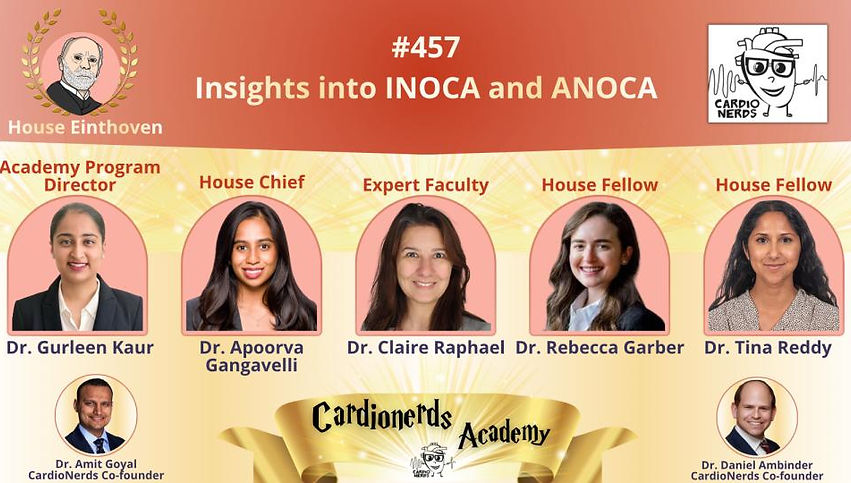
Insights into INOCA & ANOCA
Non-obstructive coronary artery disease (CAD) is more common than often recognized, particularly in women and individuals with risk factors like diabetes or hypertension. Conditions such as INOCA, ANOCA, and MINOCA can cause ischemia and chest pain despite “clean” angiograms, often due to microvascular dysfunction, coronary spasms, or subtle plaque. Diagnosing these conditions requires advanced imaging or invasive studies to assess blood flow and vessel function. Treatment focuses on reducing cardiovascular risk with aspirin, statins, ACE inhibitors, or ARBs, and managing symptoms with beta-blockers or calcium channel blockers. The key takeaway: A normal angiogram doesn’t rule out disease, and these patients need a comprehensive, evidence-based approach to care.
This episode was produced as part of the CardioNerds Academy curriculum by House Einthoven under the guidance of House Chief, Dr. Apoorva Gangavelli, and Academy Program Director, Dr. Gurleen Kaur. A matching review article will be published in US Cardiology Review, the official journal of CardioNerds.
More on Vasospastic Angina
Loading recent podcasts…

CardioNerds # 457
Jul 2, 2026
with Dr. Claire Raphael, Dr. Rebecca Garber, Dr. Tina Reddy, Dr. Apoorva Gangavelli

Non-obstructive coronary artery disease (CAD) is more common than often recognized, particularly in women and...

Cardiology # 32
Apr 20, 2026
with Dr. Samit Shah, Dr. Hady Lichaa

Small vessels can have a major impact. Are you missing the hidden culprit of chest pain? In this episode of BackTable...
1,300+ listens
The Materials available on BackTable are provided for informational and educational purposes only and are not a substitute for the independent professional judgment of a qualified healthcare professional in diagnosing or treating patients. Any opinions, statements, or views expressed are those of the individual contributors and do not necessarily reflect those of the publisher, platform, or any affiliated organization.