

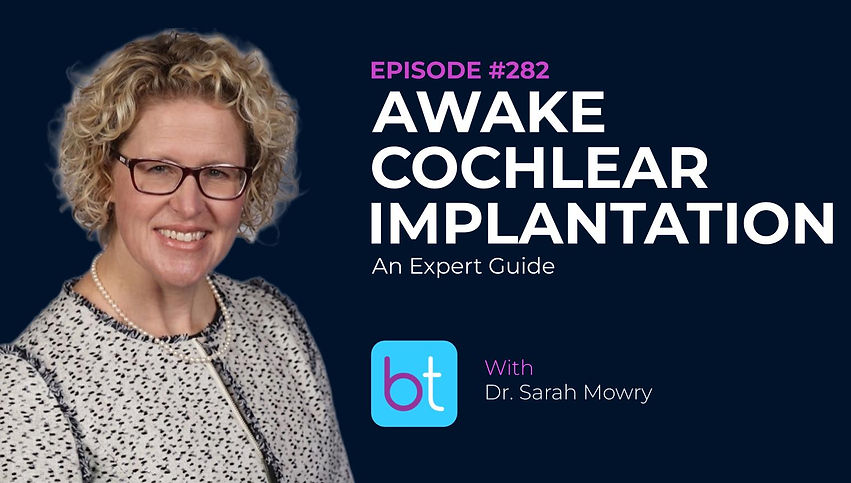


Episode # 3 • 17 Jan 2025
Awake Cochlear Implantation: An Expert Guide
Have you considered performing a cochlear implant while your patient is awake? In this episode of the Backtable ENT & Allergy Podcast, Dr. Walter Kutz and Dr. Brandon Isaacson sit down with Dr. Sarah Mowry to explore her protocol for cochlear implants under local anesthesia, an approach especially relevant for older adults concerned about the cognitive risks of general anesthesia. Dr. Mowry shares her criteria for patient selection, preoperative counseling strategies, and how she adapts the OR setup to maximize comfort and communication during awake surgery.
Timestamps
00:00 - Introduction
02:06 - Why to Consider Awake Cochlear Implants
05:32 - Indications for Awake CI
08:50 - Local Blocks and Pain Control
10:58 - Counseling and Expectations
14:40 - Preventing Intraoperative Vertigo and Converting to General Anesthesia
17:17 - Set Up and Communication with Patient
19:14 - Lesser Occipital Nerve Block and Potential Role of Processed EEG
26:32 - Pitch Matching for Single-Sided Deafness, CI, and Anxiety Considerations
29:00 - Feedback from Patients and Electrode Choice
31:30 - Advice to Surgeons and Closing Remarks
Resources
You may also like
More about this episode
The conversation covers her anesthesia protocol, including lesser occipital and postauricular nerve blocks, minimizing propofol, and using topical 2% lidocaine in sensate areas like the facial recess and epitympanum. Dr. Mowry discusses practical strategies of using warmed irrigation to reduce intraoperative vertigo and contingency plans for conversion to general anesthesia. She discusses electrode considerations and the potential role of processed EEG to titrate anesthesia depth and practical tips for surgeons interested in adopting awake cochlear implantation. Throughout, they highlight the importance of individualized patient care, multidisciplinary teamwork, and the growing role of local anesthesia in otologic surgery.
The Materials available on BackTable are provided for informational and educational purposes only and are not a substitute for the independent professional judgment of a qualified healthcare professional in diagnosing or treating patients. Any opinions, statements, or views expressed are those of the individual contributors and do not necessarily reflect those of the publisher, platform, or any affiliated organization.