



Episode # 3 • 17 Jan 2025
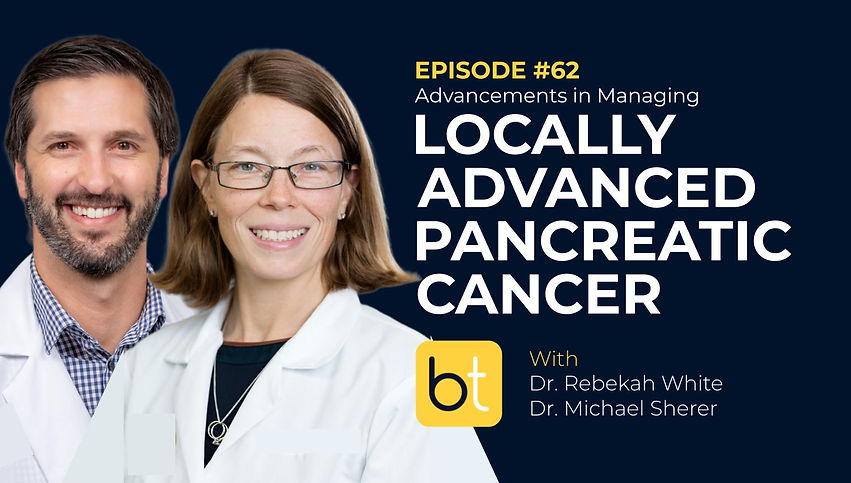
Advancements in Managing Locally Advanced Pancreatic Cancer
Can a tumor deemed permanently unresectable actually be downstaged to surgery? In this episode of BackTable Tumor Board, host Dr. Zach Berman (interventional radiologist, UC San Diego) is joined by Dr. Rebekah White (surgical oncologist) and Dr. Michael Sherer (radiation oncologist) to discuss the complexities of managing locally advanced, unresectable pancreatic cancer and evaluate how individualized patient factors, treatment response, and multidisciplinary expertise can turn inoperable tumors into surgical candidates.
Timestamps
00:00 - Meet the Tumor Board
06:17 - Induction Chemo Pathway
11:54 - Imaging Workup and PET
16:45 - Chemoradiation Basics
21:01 - SBRT Dose Escalation
28:00 - IRE NanoKnife Explained
31:14 - Emerging Options RAS and Fields
36:27 - Wrap Up and Credits
Resources
You may also like
More about this episode
The doctors define locally advanced versus borderline resectable disease using NCCN vascular criteria, while emphasizing institutional nuance, tumor biology, patient fitness, and response to induction systemic therapy (modified FOLFIRINOX vs. gemcitabine/Abraxane). They discuss how biomarkers like CA 19-9 and CEA inform decisions in the absence of significant radiographic shrinkage, and review the use of pancreas-protocol CT, MRI, PET, and staging laparoscopy for optimal assessment. The doctors explore post-chemotherapy strategies, including when to switch regimens, the choice between chemoradiation and SBRT, surgical aggressiveness, and the application of local therapies like IRE (NanoKnife). The conversation also touches on innovative techniques, histotripsy, intra-arterial options, tumor treating fields and looks ahead to the promise of KRAS inhibitors and ctDNA-driven personalized treatment.
The Materials available on BackTable are provided for informational and educational purposes only and are not a substitute for the independent professional judgment of a qualified healthcare professional in diagnosing or treating patients. Any opinions, statements, or views expressed are those of the individual contributors and do not necessarily reflect those of the publisher, platform, or any affiliated organization.