

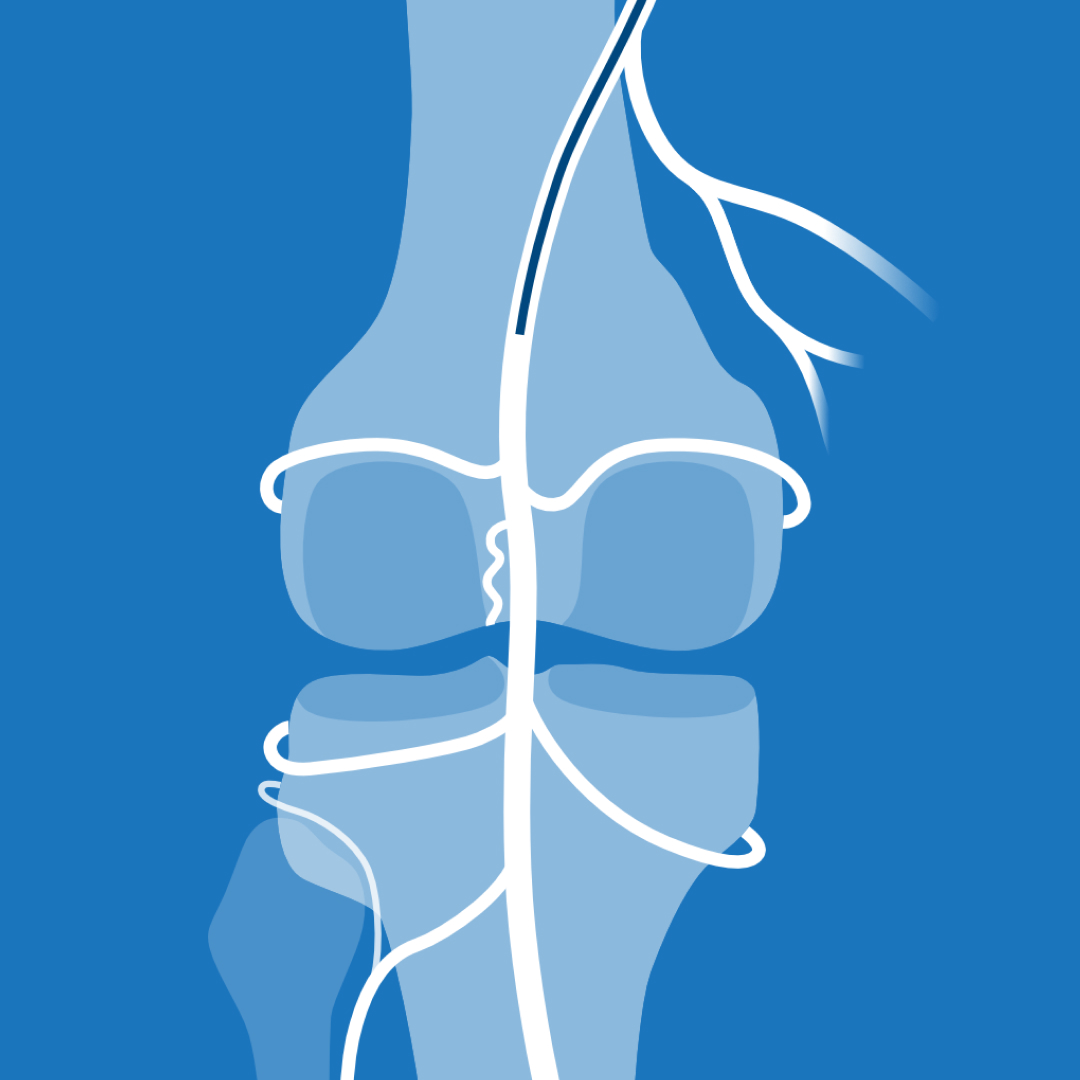
Genicular Artery Embolization
27 lessons · 3h 30m
Published: November 2024
This course caters to interventionalists aiming to expand their expertise in Genicular Artery Embolization (GAE). Led by renowned experts in the field, it covers a wide range of topics including GAE techniques and optimizing patient outcomes.
Lessons
Why Genicular Artery Embolization for OA? A look at the data with Dr. Mark Little
- 1What inspired your passion for embolization, leading to a focus on GAE?
- 2How does genicular artery embolization treat knee osteoarthritis and which patients are the best candidates?
- 3How can GAE be integrated into orthopedic practices to treat knee pain while ensuring safety?
- 4What are the study design and objectives of the Genesis 2 trial for evaluating GAE in knee OA?
- 5How has your technique and choice of embolics evolved for MSK embolizations?
- 6Tell us about some of the challenges of performing GAE
- 7What are the future prospects and current research areas in MSK embolizations for conditions beyond knee OA?
GAE: How I do it with Dr. Osman Ahmed
- 8What is the ideal patient for genicular artery embolization (GAE) for knee osteoarthritis?
- 9How did you establish your GAE practice and what data supports its efficacy?
- 10Tell us about your approach to GAE on the day of procedure?
- 11How has your choice of embolic materials evolved over time in MSK embolization procedures?
- 12Talk to us about expectations and avoiding complications for GAE
Genicular Artery Embolization Anatomy & Case Studies with Dr. Osman Ahmed
Controversies in GAE with Dr. Sid Padia & Dr. Osman Ahmed
- 15Is MRI necessary for selecting patients for GAE treatment
- 16MRI for synovial enhancement and femoral vs. pedal access
- 17Catheter selection and the value of cone beam CT in GAE
- 18GAE practice in the OBL, emphasizing quality equipment, techniques, and patient safety
- 19Embolization of abnormal vessels vs. painful side, and permanent vs. resorbable materials
- 20Particle size, permanent vs. resorbable embolics, and safety in embolization procedures
- 21Subjective pain scales versus objective functional and psychometric testing post-GAE
- 22Ideal follow-up duration in clinical studies, and need for more data
- 23Follow-up lengths, challenges, and practices in clinical studies and trials
- 24Any effectiveness in repeating GAE, patient selection challenges, and post-TKA pain management
- 25The necessity and challenges of obtaining sham data for treatment validation