



Episode # 3 • 17 Jan 2025
Genetic Carrier Screening Explained: What Every OBGYN Should Know
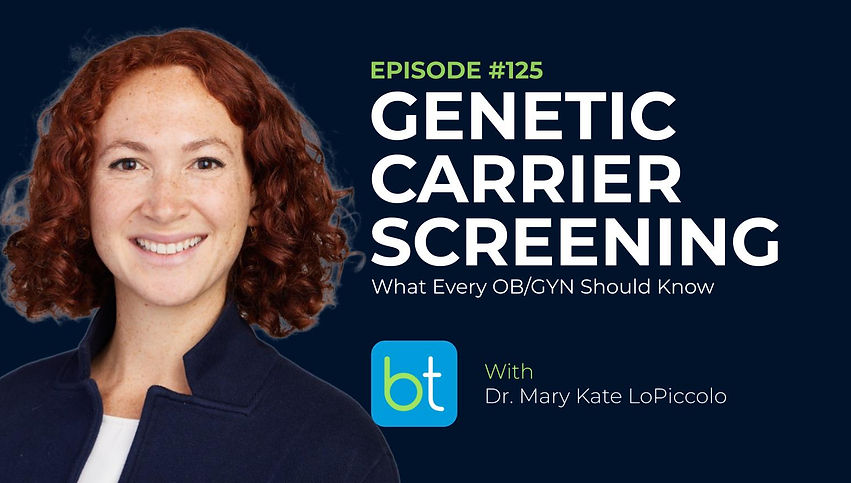
How can OBGYNs navigate the complexities of modern prenatal carrier screening? In this episode of BackTable Women’s Health, host Dr. Nicole Faulkner interviews Dr. Mary Kate LoPiccolo, a pediatrician and medical geneticist at Mount Sinai, to break down the essentials of prenatal carrier screening in OBGYN practice. They discuss what carrier screening is, when to order it, and how to manage and interpret results in real-world clinical settings.
Timestamps
00:00 - Introduction
03:03 - Understanding Carrier Screening
04:40 - Partner Testing: When and Why
06:22 - Selecting the Right Panel Size
08:27 - Managing Time Constraints and Making Referrals
10:52 - Pretest Counseling Essentials
16:44 - Decoding Results and Effective Reporting
20:52 - Limits of OB Counseling
26:19 - Navigating Common X-Linked Pitfalls
30:11 - Equity, Costs, and Over-Testing
36:11 - Tele-Genetics and Lab Resources
43:43 - Final Takeaways
Resources
You may also like
More about this episode
Dr. LoPiccolo reviews the evolution from Tay-Sachs screening in Ashkenazi Jewish populations to today’s pan-ethnic expanded panels, emphasizing carrier screening as a blood-based screening test for recessive and X-linked conditions ideally performed preconception and for both partners. The conversation covers panel size selection, best practices for pre-test counseling, common pitfalls with X-linked results, documentation and report interpretation, cost and equity barriers, and the value of referrals, telegenetics, lab genetic counselors, and resources like GeneReviews to optimize care.
The Materials available on BackTable are provided for informational and educational purposes only and are not a substitute for the independent professional judgment of a qualified healthcare professional in diagnosing or treating patients. Any opinions, statements, or views expressed are those of the individual contributors and do not necessarily reflect those of the publisher, platform, or any affiliated organization.