



Episode # 3 • 17 Jan 2025
Bladder Cancer in the Community: Meeting Patients Where They Are
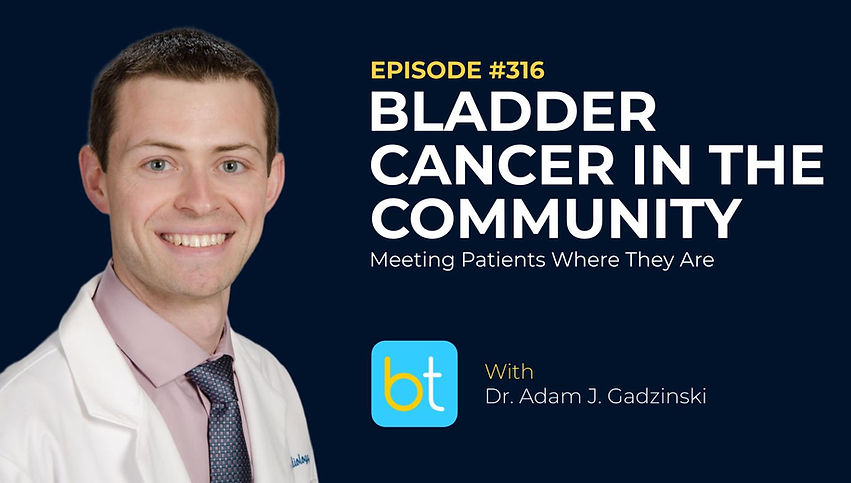
As bladder cancer treatment options expand, so do the challenges of delivering them in real-world practice. On this episode of BackTable Urology, community urologic oncologist Dr. Adam Gadzinski joins Dr. Ruchika Talwar to discuss how evolving therapies for non–muscle-invasive bladder cancer (NMIBC) are changing the landscape for both patients and providers. They explore the financial, logistical, and workflow hurdles to adopting new treatments in community settings, as well as the unique opportunities for expanding access through local clinical trials.
Timestamps
00:00 - Introduction
02:51 - Delivering Bladder Cancer Care in the Community
09:08 - Navigating Treatment Choices
13:05 - Patient Expectations and Insurance Coverage
19:01 - Ablation Strategies for Low and Intermediate Risk
22:34 - Making Therapies Community Friendly
27:12 - Launching Community Trials
31:08 - Referrals and Community Practice Advice
36:36 - Cystectomy Counseling Pearls
44:46 - Closing Takeaways
Resources
You may also like
More about this episode
The conversation covers decision-making for bladder-preserving therapies, radical cystectomy, and trimodal approaches, along with strategies for guiding patients through these complex choices. Dr. Gadzinski shares insights on navigating insurance, launching community trials, and sustaining practice growth while maintaining high-quality care. The episode also offers practical advice on referrals, patient counseling, and finding the right practice environment for long-term success in bladder cancer care.
The Materials available on BackTable are provided for informational and educational purposes only and are not a substitute for the independent professional judgment of a qualified healthcare professional in diagnosing or treating patients. Any opinions, statements, or views expressed are those of the individual contributors and do not necessarily reflect those of the publisher, platform, or any affiliated organization.