
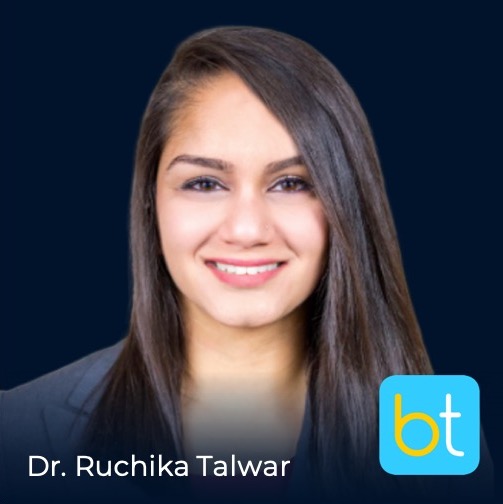
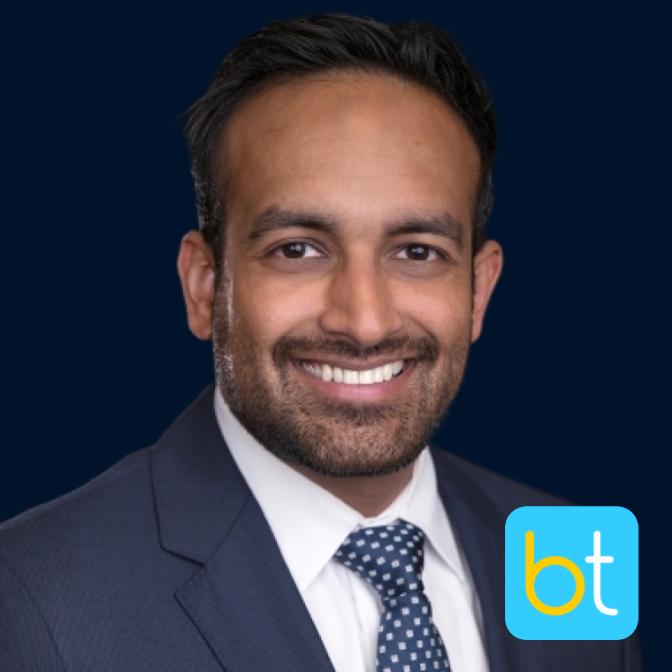
Dr. Ruchika Talwar is a urologic oncologist at Vanderbilt University Medical Center in Nashville, Tennessee.
Podcasts
 Bone & Sports # 124Nov 24, 2026
Direct Contracting in Healthcare

A $20,000 joint replacement, all in, anesthesia included, with no surprise bills: in Mark Cuban's example, that is the carve-out an independent surgery center can pitch directly to the self-insured employers among its patients. On this episode of the BackTable Podcast, Dr. Ruchika Talwar, value-based care leader, talks with Mark Cuban, entrepreneur and founder of Mark Cuban Cost Plus Drug Company, about who actually sets the price of care in the United States. They trace how a cold email about drug shortages led to Cost Plus Drugs and then Cost Plus Wellness, an open source library of direct contracts between self-insured employers and providers; why surgery centers that “do nothing but joint replacements” can win employer contracts with no middleman; why he believes the contract, not the published price, is where the real problems hide; and why he tells orthopedic practices, “You have to do outbound sales.”
55m Cardiology # 61Nov 24, 2026
Direct Contracting in Healthcare

Surgery centers that focus on nothing but cardiology procedures can be far more efficient and come back with much lower pricing, Mark Cuban says, which makes them exactly the providers employers want to contract with directly. On this episode of the BackTable Podcast, Dr. Ruchika Talwar, value-based care leader, talks with Mark Cuban, entrepreneur and founder of Mark Cuban Cost Plus Drug Company, about who actually sets the price of care in the United States. They trace how a cold email about drug shortages led to Cost Plus Drugs and then Cost Plus Wellness, an open source library of direct contracts between self-insured employers and providers, and why he believes the contract, not the published price, is where the real problems hide. By his estimate, 67% of people with job-based coverage get it through a self-insured employer, which makes employers, not insurers, the real payers in American healthcare.
55m Women's Health # 140Nov 17, 2026
Direct Contracting in Healthcare

Pitocin on an FDA shortage list is a problem every labor and delivery unit understands, and it was part of the cold email that pulled Mark Cuban into healthcare. On this episode of the BackTable Podcast, Dr. Ruchika Talwar, value-based care leader, talks with Mark Cuban, entrepreneur and founder of Mark Cuban Cost Plus Drug Company, about who actually sets the price of care in the United States. They trace how that start led to Cost Plus Drugs and then Cost Plus Wellness, an open source library of direct contracts between self-insured employers and providers, and why he believes the contract, not the published price, is where the real problems hide. They also discuss who really pays: by his estimate, 67% of people with job-based coverage get it through a self-insured employer.
55m Urology # 344Nov 17, 2026
Insights into RVUs: Historical Context & Recent Changes
If you’ve felt penalized for getting faster in the OR, you’re not imagining it. On this episode of BackTable Urology, Dr. Ruchika Talwar interviews Dr. Kyle Richards, urologic oncologist at the University of Wisconsin and the American Urological Association's (AUA) representative on the RVS Update Committee (RUC), about how relative value units (RVUs) are set and who decides what a procedure is worth. Dr. Richards traces RVUs from their 1989 origins to the physician surveys behind every recommendation the RUC sends to Medicare, explains how a new technology earns a CPT code and a value, and shares why urology's single seat on the 31-member committee makes every survey response count.
49m Vascular & IR # 693Nov 14, 2026
Direct Contracting in Healthcare

“A veterinarian that's 117 years old who hasn't practiced since 1923.” That is who Mark Cuban says ends up on the other end of the peer-to-peer, and any interventional radiologist who has fought for coverage of a procedure will recognize the call. On this episode of the BackTable Podcast, Dr. Ruchika Talwar, value-based care leader, talks with Mark Cuban, entrepreneur and founder of Mark Cuban Cost Plus Drug Company, about who actually sets the price of care in the United States. They trace how a cold email about drug shortages led to Cost Plus Drugs and then Cost Plus Wellness, an open source library of direct contracts between self-insured employers and providers; why his direct contracts trade fewer denials and peer-to-peers for a better price by trusting the doctor; why focused surgery centers with no middleman make strong partners for employers; and why he believes the contract, not the published price, is where the real problems hide.
55m- Urology # 343Nov 12, 2026
Direct Contracting in Healthcare

“No cancer patient ever got healthier because their claim was denied and delayed. None. Not one.” Mark Cuban's verdict will ring true for any urologist who has fought a denied or delayed claim, and his alternative is a contract that starts by trusting the doctor. On this episode of BackTable Urology, Dr. Ruchika Talwar, urologic oncologist and value-based care leader, talks with Mark Cuban, entrepreneur and founder of Mark Cuban Cost Plus Drug Company, about who actually sets the price of care in the United States. They trace how a cold email about drug shortages led to Cost Plus Drugs and then Cost Plus Wellness, an open source library of direct contracts between self-insured employers and providers, and why he believes the contract, not the published price, is where the real problems hide. By his estimate, 67% of people with job-based coverage get it through a self-insured employer, which makes employers, not insurers, the real payers in American healthcare.
55m  ENT & Allergy # 303Nov 12, 2026
Direct Contracting in Healthcare

"No cancer patient ever got healthier because their claim was denied and delayed," Mark Cuban says, and his answer is a contract that starts by trusting the doctor. On this episode of the BackTable Podcast, Dr. Ruchika Talwar, value-based care leader, talks with Mark Cuban, entrepreneur and founder of Mark Cuban Cost Plus Drug Company, about who actually sets the price of care in the United States. They trace how a cold email about drug shortages led to Cost Plus Drugs and then Cost Plus Wellness, an open source library of direct contracts between self-insured employers and providers, and why he believes the contract, not the published price, is where the real problems hide. He also explains why independent practices should know their profitability by payer and call the self-insured employers among their patients. By his estimate, 67% of people with job-based coverage get it through a self-insured employer, which makes employers, not insurers, the real payers in American healthcare.
55m Tumor Board # 91Nov 12, 2026
Direct Contracting in Healthcare

"No cancer patient ever got healthier because their claim was denied and delayed," Mark Cuban says, and his answer is a contract that starts by trusting the doctor. On this episode of the BackTable Podcast, Dr. Ruchika Talwar, value-based care leader at Vanderbilt University Medical Center, talks with Mark Cuban, entrepreneur and founder of Mark Cuban Cost Plus Drug Company, about who actually sets the price of care in the United States. For oncology teams, he describes how an employer with access to its own claims data can contract directly with an oncology center for its employees with cancer. He also traces how a transparent pharmacy model led to Cost Plus Wellness, an open source library of direct contracts between self-insured employers and providers, and why he believes the contract, not the published price, is where the real problems hide.
55m Industry # 109Nov 12, 2026
Direct Contracting in Healthcare

“Direct contract with yourself.” That is Mark Cuban's challenge to hospital CEOs and CFOs whose own self-insured health plans, he says, can pay a carrier-owned administrator more for an employee's care than the hospital itself was paid to provide it. On this episode of the BackTable Podcast, Dr. Ruchika Talwar, value-based care leader, talks with Mark Cuban, entrepreneur and founder of Mark Cuban Cost Plus Drug Company, about who actually sets the price of care in the United States. They trace how a cold email about drug shortages led to Cost Plus Drugs, a robotic factory that can switch manufacturing lines every four hours, and then Cost Plus Wellness, an open source library of direct contracts between self-insured employers and providers, and why he believes the contract, not the published price, is where the real problems hide. The discussion also covers who really pays: by his estimate, 67% of people with job-based coverage get it through a self-insured employer, and 72% of the big carriers' revenue comes from taxpayers.
55m- Urology # 340Nov 3, 2026
Understanding Intermediate-Risk Bladder Cancer

By one estimate, half or more of all non-muscle invasive bladder cancer (NMIBC) is intermediate risk, yet the major guidelines still do not define it the same way, which leaves urologists sorting a large, mixed group of patients without a shared playbook for when to resect again, treat in the office, or start intravesical therapy. On this episode of BackTable Urology, Dr. Ruchika Talwar welcomes Dr. Wesley Yip, urologic oncologist at City of Hope, to rethink what she calls the forgotten stepchild of bladder cancer: intermediate-risk non-muscle invasive bladder cancer (NMIBC). Dr. Yip explains why he sees the category as a catch-all rather than a single biological entity, by his estimate covering 50 to 60 percent of NMIBC, why he now relies on the International Bladder Cancer Group (IBCG) definition, and why tumor grade comes first, ahead of multiplicity, size, and recurrence timing.
42m - Urology # 339Oct 29, 2026
AI's Role in Enhancing Urology Care

By his own estimate, an AI scribe gives one urologist about two hours of his day back, and an evidence tool built into it has taught him something new in the clinic almost every day. On this episode of BackTable Urology, Dr. Ruchika Talwar welcomes back Dr. David Canes, urologist at Lahey Hospital & Medical Center and founder of WellPrept, to talk about how urologists can practically put AI to work. Dr. Canes explains why he sees this moment as a renaissance for physicians, how an AI scribe turned him from author into proofreader, by his estimate saving about two hours a day, and why evidence tools running alongside the scribe now answer questions in the exam room, including a question about post-prostatectomy dysorgasmia, a complaint that rarely comes up in clinic.
57m - Urology # 338Oct 27, 2026
From Numbers to Decisions: Clinical Utility of Biomarkers in Prostate Cancer Diagnosis
Every prostate cancer biomarker returns a number, but the real question is whether that number changes what you do next for the patient. On this episode of BackTable Urology, Dr. Ruchika Talwar welcomes Dr. Amir Lebastchi, urologic oncologist at Keck Medicine of USC, to discuss how biomarkers are moving prostate cancer care from numbers to meaningful clinical decisions. They define what makes a biomarker clinically useful, organize the growing list of blood, urine, and tissue tests into pre-biopsy, post-negative-biopsy, and post-diagnosis settings, and talk through where these tests fit alongside MRI after an elevated PSA.
47m - Urology # 337Oct 20, 2026
Advancements in Ureteroscopy for Stone Management

How is suction technology changing what it means to be “stone-free” after ureteroscopy? On this episode of BackTable Urology, Dr. Ruchika Talwar welcomes Dr. Karen Stern, endourologist at Mayo Clinic Arizona, for a practical discussion of how ureteroscopy is evolving in the era of suction. They discuss how thin-slice CT has revealed just how much stone typically remains after surgery, why dusting versus fragmenting is now a patient-dependent choice, and what to consider when selecting between suction sheaths, aspiration scopes, and traditional access.
24m - Urology # 336Oct 15, 2026
Biomarkers in Treatment Intensification for Prostate Cancer

Same risk group, very different benefit. Can biomarkers help identify who needs treatment intensification in prostate cancer? On this episode of BackTable Urology, Dr. Ruchika Talwar and Dr. Angela Jia, a radiation oncologist at University Hospitals Cleveland Medical Center, break down the difference between prognostic and predictive biomarkers and how genomic testing is informing the way clinicians counsel patients. They review trial data suggesting that men with a low genomic score may gain little from adding hormone therapy, along with early prospective evidence that the luminal B subtype may help identify who benefits most from intensification.
46m - Urology # 326Aug 27, 2026
Strategies for Surgical Training During High-Stakes Operations
How can high-stakes surgical cases be optimized for teaching while ensuring patient safety and trainee growth? On this episode of BackTable Urology, Dr. Ruchika Talwar interviews Dr. Kelvin Moses about intentional strategies for surgical education, especially during complex urologic oncology operations. They discuss workflows that prioritize preoperative planning, structured debriefs, and progressive autonomy for trainees, as well as the importance of psychological safety and open communication with patients and families.
49m - Urology # 325Aug 25, 2026
Navigating the PSA Maze in Urology

Is an elevated prostate-specific antigen (PSA) the beginning or the end of the prostate cancer workup? On this episode of BackTable Urology, Dr. Ruchika Talwar interviews Dr. Tarik Benidir to explore the “PSA problem,” explaining why PSA is biologically useful but clinically imprecise, often leading to false positives, unnecessary biopsies, and detection of indolent disease. They discuss a rational, patient-centered approach to elevated PSA, including when to repeat the test, how to interpret results in the context of age, race, family history, and prostate size, and the use of PSA density and age-adjusted norms instead of rigid cutoffs.
44m - Urology # 323Aug 11, 2026
Managing Intermediate-Risk Bladder Cancer

Recurrent low-grade, intermediate-risk bladder cancer presents a unique treatment challenge: recurrence is common, progression is uncommon, and the burden of repeated procedures can add up quickly. On this episode of the BackTable Urology Podcast, Dr. Ruchika Talwar interviews Dr. Charles "Chas" Peyton about how to manage intermediate-risk bladder cancer patients while balancing disease control and quality of life. They discuss the cumulative impact of repeated TURBTs and explore the evolving role of office-based treatments and chemoablative therapies as alternatives to the traditional treatment cycle.
37m - Urology # 320Jul 31, 2026
Gem-iDRS for BCG Unresponsive Bladder Cancer: A Deep Dive

Can a drug-eluting bladder device change the treatment algorithm for BCG-unresponsive non-muscle invasive bladder cancer (NMIBC)? In this episode of BackTable Urology, Dr. Ruchi Talwar interviews Dr. Sarah Psutka to explore the emerging role of a novel intravesical device that delivers sustained gemcitabine therapy for patients refusing or ineligible for cystectomy. They highlight new FDA-approved treatment options, real-world workflow considerations, and the clinical potential for continuous intravesical chemotherapy in a crowded therapeutic landscape.
49m - Urology # 316Jul 14, 2026
Bladder Cancer in the Community: Meeting Patients Where They Are

As bladder cancer treatment options expand, so do the challenges of delivering them in real-world practice. On this episode of BackTable Urology, community urologic oncologist Dr. Adam Gadzinski joins Dr. Ruchika Talwar to discuss how evolving therapies for non–muscle-invasive bladder cancer (NMIBC) are changing the landscape for both patients and providers. They explore the financial, logistical, and workflow hurdles to adopting new treatments in community settings, as well as the unique opportunities for expanding access through local clinical trials.
48m - Urology # 315Jul 10, 2026
Private Equity's Impact on Urology Practices

What opportunities and challenges does private equity bring to urology practices, and how can physicians engage in ways that strengthen their practice and preserve clinical priorities? On this episode of BackTable Urology, Dr. Ruchika Talwar interviews Dr. Benjamin Lowentritt of Chesapeake Urology and United Urology Group to unpack the realities of private equity involvement in medicine. They discuss the motivations behind consolidation, the role of management services organizations, and strategies for building mutually beneficial partnerships while upholding physician autonomy and patient care.
48m - Urology # 313Jun 30, 2026
Approaches to Pelvic Lymph Node Dissection in Contemporary Prostate Cancer Surgery

Is pelvic lymph node dissection still necessary in the era of PSMA PET imaging? In this episode of BackTable Urology, Dr. Ruchi Talwar interviews Dr. Kirsten Greene about how advanced imaging is influencing decisions for radical prostatectomy. They examine the strengths and limits of PSMA PET, the risks and benefits of PLND, and why careful, evidence-based decision-making remains essential.
34m - Industry # 101Jun 9, 2026
Keeping Up With Changes in Urologic Oncology & General Urology
Are academic medical conferences falling short when it comes to preparing clinicians for the unpredictable realities of modern surgery and patient care? In this episode of BackTable Industry, co-founder Anish Parikh interviews Dr. Ruchika Talwar about the real-world challenges traditional conferences often overlook and how informal, peer-to-peer exchanges like those at Creator Weekend™ in Nashville bridge the gap.
29m - Urology # 305Jun 2, 2026
Immune Therapy Innovations for BCG Unresponsive Cancer

Ready to move beyond “one-size-fits-all” for BCG-unresponsive NMIBC? In this episode of BackTable Urology, Dr. Ruchika Talwar hosts Dr. Sam Chang to discuss the evolving treatment landscape for BCG-unresponsive non-muscle invasive bladder cancer (NMIBC). They explore why BCG may fail, the science and clinical rationale behind new immunotherapies and gene therapies, practical approaches to patient selection, treatment sequencing, and surveillance, and the value of emerging biomarkers, empowering urologists to make more informed, personalized decisions in complex cases of NMIBC.
48m - Urology # 301May 5, 2026
Integrating Biomarkers in Prostate Cancer Treatment
Are biomarkers the missing link in personalized prostate cancer care? What is the practical role of biomarkers across the prostate cancer treatment continuum? In this episode of BackTable Urology, Dr. Udit Singhal (University of Michigan) joins Dr. Ruchika Talwar (Vanderbilt University) to explore the evolving role of genomic classifiers and biomarkers in prostate cancer care.
33m