


Dr. Brian Funaki
Interventional Radiologist
2 Podcasts • 17 Cases on BackTable
Dr. Brian Funaki is the section chief of vascular and interventional radiology and a professor of radiology at The University of Chicago Medicine.
Learn from the experiences and expertise of Dr. Brian Funaki and other leading voices in your specialty on the BackTable app.


Episode # 630 • 02 Apr 2026
Trauma Embolization Techniques Using Vascular Plugs
As interventional radiology cements its position as a primary clinical responder for acute arterial hemorrhage, what if you could achieve rapid and durable arterial occlusion with a single, highly deliverable device? In this episode of the BackTable Podcast, Dr. Alex Villalobos (UNC), Dr. Nima Kokabi (UNC), and Dr. Brian Funaki (UChicago) join host Dr. Kavi Krishnasamy to explore the shifting paradigms of arterial embolization in a case-based discussion highlighting modern vascular plug technologies.
This podcast is supported by
More from Dr. Brian Funaki
Loading recent podcasts…

VI Case
Apr 8, 2026

Thoracic Duct Embolization Technique
VI Case
Apr 8, 2026

Embolization: Refractory Bleeding From Rectal Varices
VI Case
Apr 3, 2026

PAVM Embolization: Choice of Embolic for Successful PAVM Occlusion: Plugs vs Coils
VI Case
Apr 2, 2026
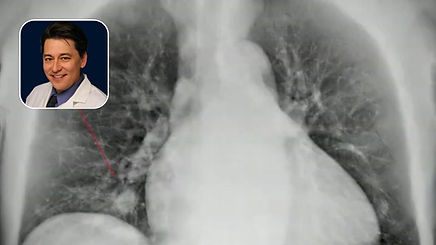
PAP Embolization: Massive Hemoptysis in Patient with History of IVDA
VI Case
Apr 8, 2026

Embolization: Bleeding Esophageal Varices in Patient with Portal Hypertension
VI Case
Apr 3, 2026

PAVM Embolization: Patient with HHT & Multiple AVMs in the Right Lung
VI Case
Apr 2, 2026

PAVM Embolization: Patient with HHT & Multiple Tortuous Pulmonary AVMs
VI Case
Apr 2, 2026

AVM Embolization: Staged Treatment Strategy for High-Flow Shoulder AVM
About
An internationally recognized expert in vascular and interventional radiology, Brian Funaki, MD, performs the full range of vascular and non-vascular interventions, including angioplasty, stenting, thrombolysis and embolization, as well as transplant-related procedures. Guided by state-of-the art imaging techniques, Dr. Funaki manipulates and directs tiny instruments throughout the body for both diagnostic and treatment purposes. These minimally invasive procedures are often used as "smaller, faster, safer, better" alternatives to traditional open surgery.
Dr. Funaki's research activity is focused on vascular intervention, gastrostomy, and super selective embolization. He has more than 200 publications listed in the U.S. National Library of Medicine on a broad range of vascular and non-vascular image-guided interventions. The vast majority of his research is focused on patient care and immediately translated to clinical practice.
Throughout his career, Dr. Funaki has led many scientific and academic committees. He is a former member of the Executive Council of the Society of Interventional Radiology. An avid writer, he has authored two books and 11 book chapters. He is frequently invited to contribute articles and editorials for scientific journals, and has presented over 100 invited lectures at universities and national and international medical meetings. Dr. Funaki is an associate editor of the Journal of Vascular and Interventional Radiology. He served as editor-in-chief for Seminars in Interventional Radiology from 2004-2011 and is the co-editor in chief of Updates in Interventional Radiology. He has earned many awards and distinctions, including being listed as one of Castle and Connolly’s Top Doctors, "Best Doctors in America" by Best Doctors Inc. and Chicago’s Top Docs in Chicago Magazine.
Visit University of Chicago Medicine to learn more about Dr. Brian Funaki.
The Materials available on BackTable are provided for informational and educational purposes only and are not a substitute for the independent professional judgment of a qualified healthcare professional in diagnosing or treating patients. Any opinions, statements, or views expressed are those of the individual contributors and do not necessarily reflect those of the publisher, platform, or any affiliated organization.