


Dr. Nima Kokabi
Interventional Radiologist
8 Podcasts • 19 Cases • 1 Course on BackTable
Dr. Nima Kokabi is an interventional radiologist at Alberta Health in Chapel Hill, North Carolina.
Learn from the experiences and expertise of Dr. Nima Kokabi and other leading voices in your specialty on the BackTable app.


Episode # 651 • 02 Jun 2026
Radioembolization Workflow: Insights & Best Practices
What does it really take to run a high-volume Y90 program that is efficient, scalable, and patient-centered? In this episode of the BackTable 2026 HCC Creator Weekend™, host Dr. Zach Berman is joined by Drs. Nima Kokabi and Kirema Garcia-Reyes to break down the systems, workflows, and strategies that drive successful radioembolization centers. The conversation focuses on overcoming referral and insurance delays, implementing multidisciplinary clinics, and using tools like single-session Y90 and routine post-treatment dosimetry to reduce treatment times and improve outcomes.
This podcast is supported by an educational grant from Sirtex and Boston Scientific.
More from Dr. Nima Kokabi
Loading recent podcasts…

VI Case
Apr 8, 2026

Thoracic Duct Embolization Technique
VI Case
Apr 8, 2026

Embolization: Refractory Bleeding From Rectal Varices
VI Case
Apr 3, 2026

PAVM Embolization: Choice of Embolic for Successful PAVM Occlusion: Plugs vs Coils
VI Case
Apr 2, 2026
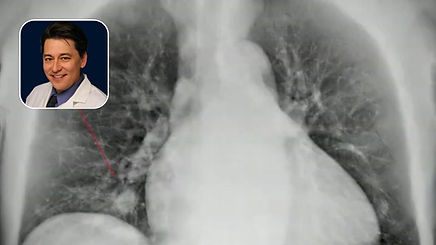
PAP Embolization: Massive Hemoptysis in Patient with History of IVDA
VI Case
Apr 8, 2026

Embolization: Bleeding Esophageal Varices in Patient with Portal Hypertension
VI Case
Apr 3, 2026

PAVM Embolization: Patient with HHT & Multiple AVMs in the Right Lung
VI Case
Apr 2, 2026

PAVM Embolization: Patient with HHT & Multiple Tortuous Pulmonary AVMs
VI Case
Apr 2, 2026

AVM Embolization: Staged Treatment Strategy for High-Flow Shoulder AVM

About
Nima Kokabi, MD, is an Associate Professor of Radiology, Vice Chair of Clinical Research, Interventional Oncology Director, and Cancer Imaging Director at UNC Chapel Hill. Before he joined the UNC Department of Radiology he spent five years at Emory University. Dr. Kokabi was born in Iran and grew up in Canada. He graduated with honors from the University of Sydney Medical School in 2011. From there, he completed his internship at MetroWest Medical Center, Harvard Medical School before moving on to his Diagnostic Residency at Emory University School of Medicine. He completed his Vascular Interventional Radiology Fellowship at Yale University School of Medicine in 2017.
Dr. Kokabi was majoring in engineering during his undergraduate education. During that time, he worked on image-processing projects. That was his first introduction to Radiology. While collaborating with some doctors on those projects, he realized there needed to be more connection between people who practice medicine and those who create medical devices. He intended to bridge that gap as much as one person could. That is where his interest in Radiology originated. He thought that of all the fields in medicine, it’s the one that relies heavily on technology and advancement. During medical school, he was in a unique small group of people that wanted to do Radiology from the beginning. So many of his peers and colleagues didn’t even know what Radiology was when they entered medical school.
He eventually chose to pursue Interventional Radiology as his specialty because the beauty of IR is that you get to do life-saving procedures. Many areas of radiology are heavily diagnostic and have no interaction with patients. However, IR is integral to many treatment teams for cancer or non-cancer-related diseases.
Visit University of North Carolina Chapel Hill to learn more about Dr. Nima Kokabi.
The Materials available on BackTable are provided for informational and educational purposes only and are not a substitute for the independent professional judgment of a qualified healthcare professional in diagnosing or treating patients. Any opinions, statements, or views expressed are those of the individual contributors and do not necessarily reflect those of the publisher, platform, or any affiliated organization.