


Dr. Kelly Bree
Urologic Oncologist
4 Podcasts • 1 Course on BackTable
Dr. Kelly Bree is a urologic oncologist and Assistant Professor of Urology at MD Anderson Cancer Center in Houston, Texas.
Learn from the experiences and expertise of Dr. Kelly Bree and other leading voices in your specialty on the BackTable app.
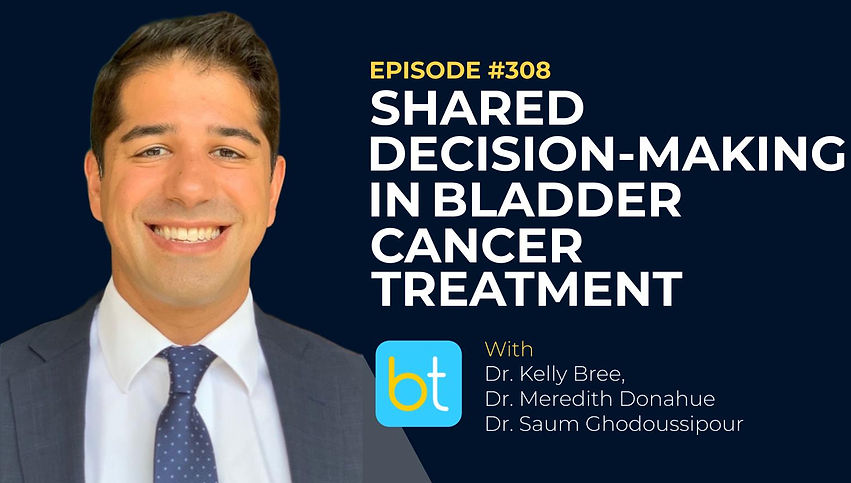

Episode # 308 • 11 Jun 2026
Navigating Shared Decision-Making in Bladder Cancer Treatment
What matters most to patients with non-muscle invasive bladder cancer (NMIBC)? In this episode of BackTable Urology, Dr. Kelly Bree, Dr. Saum Ghodoussipour, and Meredith Donahue DNP join host Dr. Vignesh Packiam to discuss the power of shared decision-making across the NMIBC spectrum. They explore risk-adapted treatment selection, when to escalate or de-escalate therapy, and how to navigate conversations about recurrence risk, treatment burden, quality of life, and the possibility of cystectomy.
This podcast is supported by an educational grant from Johnson & Johnson.
More from Dr. Kelly Bree
Loading recent podcasts…

About
Dr. Kelly Bree is an Assistant Professor in the Department of Urology at the University of MD Anderson Cancer Center. She was born and raised in Delaware and earned her medical degree from the George Washington University School of Medicine and Health Sciences. She subsequently completed her urology residency at the University of California San Diego. After residency, she completed a two-year fellowship in Urologic Oncology at the University of Texas MD Anderson Cancer Center. Upon completion of her fellowship, she remained in Houston to join the faculty at MD Anderson. She runs a busy clinical practice where she sees patients with bladder, prostate and kidney cancer. Her research interests include clinical and health services research in bladder cancer. She also has special interests in quality improvement projects aimed at improving perioperative care to patients with urologic malignancies.
Visit MD Anderson Cancer Center to learn more about Dr. Kelly Bree.
The Materials available on BackTable are provided for informational and educational purposes only and are not a substitute for the independent professional judgment of a qualified healthcare professional in diagnosing or treating patients. Any opinions, statements, or views expressed are those of the individual contributors and do not necessarily reflect those of the publisher, platform, or any affiliated organization.