

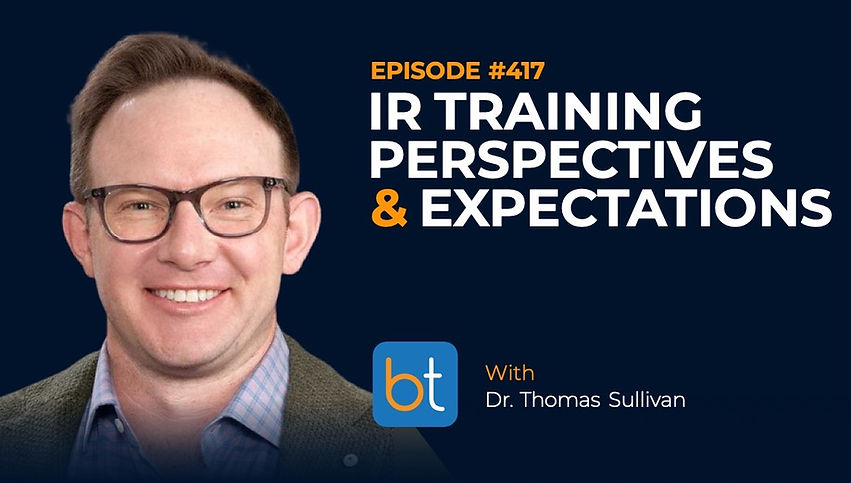

Episode # 417 • 16 Feb 2024
IR Training: Perspectives & Expectations
In this episode of the BackTable Podcast, host Dr. Aaron Fritts interviews guest Dr. Thomas Sullivan about the findings from a recent survey exploring the reasons behind professional job changes among interventional radiologists. Dr. Sullivan is the Assistant Program Director of Diagnostic and Integrated Interventional Radiology Residency programs at Wake Forest University.
This podcast is supported by
Timestamps
00:00 - Introduction
02:50 - Discussion on IR Training and Practice
04:51 - Survey Discussion and Key Findings
16:47 - Importance of Diagnostic Skills in IR
19:01 - Deciding Factors for First Job After Training
21:04 - Need for Medical Services in Rural Settings
25:23 - Role of Mentorship in Job Seeking
28:21 - Importance of Networking in Career Development
32:37 - Future of IR Training and Practice
38:23 - Role of BackTable in IR Training
Resources
You may also like
More about this episode
Dr. Sullivan highlights the importance of mentorship during residency and notes the huge impact of geography and financial compensation in determining job satisfaction and longevity in a role. He also discusses some surprising insights about trainee expectations of future practice settings, the need for a variety in practice caseload, and the desire for about 80% of clinical time to be spent on dedicated IR activities. The conversation also delves into the challenges of equipping residents for rural practice and the potential value of developing a procedural radiology curriculum. Dr. Sullivan anticipates that the survey results will help improve and adapt training paradigms to better align with the evolving landscape of interventional radiology practice.
The Materials available on BackTable are provided for informational and educational purposes only and are not a substitute for the independent professional judgment of a qualified healthcare professional in diagnosing or treating patients. Any opinions, statements, or views expressed are those of the individual contributors and do not necessarily reflect those of the publisher, platform, or any affiliated organization.